Mali is unraveling under the weight of insurgent violence, political isolation, and shifting foreign military alliances. The latest development—Russia’s Africa Corps confirming a full withdrawal from Kidal—marks a strategic pivot in the Sahel’s increasingly complex war landscape. This move doesn’t signal retreat alone; it reflects recalibration, fragmentation, and the high cost of counterinsurgency in one of the world’s most volatile regions.
Kidal, a remote northern stronghold long contested by Tuareg rebels, jihadist factions, and state forces, has become symbolic of Mali’s failed stabilization efforts. The pullout of Russian paramilitaries from this flashpoint raises urgent questions: Why now? What does this mean for local security? And who benefits from the vacuum left behind?
The Fall of Kidal: A Strategic Setback
Kidal’s importance stretches far beyond geography. Historically a center of Tuareg resistance, it lies at the intersection of Mali, Niger, and Algeria—key transit routes for weapons, migrants, and extremist groups. Control over Kidal has long been a litmus test for any government claiming authority over northern Mali.
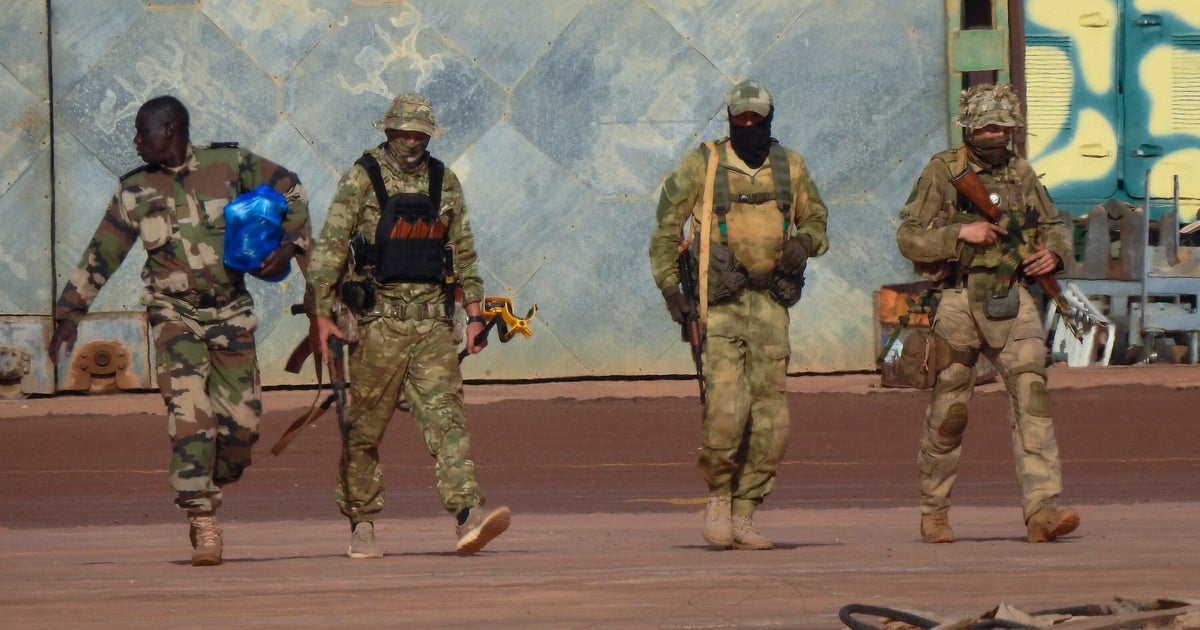
Russia’s Africa Corps, widely seen as a successor to the Wagner Group, occupied key positions in Kidal following a series of joint operations with Mali’s military junta in 2023. Their presence was sold as a bulwark against jihadist expansion, particularly from groups affiliated with ISIS and al-Qaeda. But attacks intensified, not diminished.
In early 2024, coordinated assaults on Russian and Malian outposts in Kidal culminated in the loss of two armored vehicles and at least 14 personnel. Satellite imagery later revealed scorched supply depots and abandoned positions—visible proof of a forced exit.
“We are repositioning our forces to better respond to dynamic threats,” a spokesperson for Russia’s Africa Corps told Russian state media. “Kidal remains a concern, but our strategy now prioritizes mobility and precision over fixed garrisons.”
This diplomatic phrasing masks what analysts see as a tactical defeat. The withdrawal wasn’t voluntary in the traditional sense—it was driven by unsustainable attrition, poor intelligence, and the inability to secure local backing.
Why the Russia Pullout Matters
The departure from Kidal is more than a logistical shift. It underscores a fragile reality: foreign military forces, no matter how well-armed, cannot stabilize Mali without political legitimacy or popular trust.
Escalating Mali Attacks Preceded the Exit
The timeline is revealing:
- December 2023: IED attack kills 7 Malian soldiers near Tessalit, just east of Kidal.
- January 2024: Ambush on a joint patrol kills 3 Russian operatives and 5 Malian troops.
- February 2024: Suicide bombing targets a Russian checkpoint in Kidal city—claimed by JNIM (Group for the Support of Islam and Muslims).
- March 2024: Russia confirms full withdrawal.
Each attack exposed vulnerabilities: poor coordination, reliance on predictable routes, and minimal engagement with local communities. Unlike French forces, which invested in civil-military operations before their 2022 exit, the Russian model focused almost exclusively on kinetic operations—kill, hold, repeat—without building alliances.

The result? Local populations saw little difference between occupiers and insurgents. In some villages, Russian convoys were met with silence or hostility. In others, jihadists exploited the resentment, recruiting from disillusioned youth.
The Wagner Legacy and the Rise of Africa Corps
Russia’s military footprint in Mali didn’t begin with Africa Corps. It evolved from the Wagner Group’s shadow war—a hybrid of private military contracting, resource extraction, and geopolitical influence.
After Yevgeny Prigozhin’s death in 2023, Wagner’s Sahel operations were formally absorbed into the Russian Ministry of Defense under the Africa Corps banner. This rebrand was more than cosmetic. It signaled tighter state control and an effort to distance Moscow from the scandals that plagued Wagner: mass killings, looting, and human rights abuses.
But the methods remained largely unchanged.
Africa Corps continued Wagner’s playbook:
- Rapid deployment to high-risk zones
- Minimal transparency on troop numbers or mission parameters
- Ties to gold mining ventures in central Mali (e.g., in the Bourem and Sadjoala regions)
And yet, in Kidal, this model failed. Unlike in Bamako or Gao, where Russian forces operated near urban centers with supply lines and air support, Kidal’s isolation made resupply hazardous. The terrain—endless arid plateaus and narrow canyons—is ideal for ambushes. Once attacks began, Russia’s options narrowed quickly.
Who Fills the Power Vacuum? With Russian and Malian forces pulling back, the security vacuum in Kidal is already being exploited.
1. JNIM (Group for the Support of Islam and Muslims)
This al-Qaeda-linked coalition has long operated in the region. Since the withdrawal, JNIM has claimed control over at least three former Russian outposts. Their messaging emphasizes “liberation” from foreign invaders, resonating with some in the local population.
2. Islamic State in the Greater Sahara (ISGS) ISGS, which competes with JNIM for dominance, has also increased patrols near Kidal’s eastern flank. Their presence risks reigniting inter-jihadist conflict—a brutal dynamic seen earlier in Niger’s Tillabéri region.
3. Tuareg-led CSP-PSD Coalition The Permanent Strategic Framework for Peace, Security, and Development (CSP-PSD), a coalition of armed Tuareg groups, has reasserted influence in rural areas. While not extremist, they oppose both the Malian junta and foreign forces. Some analysts fear a return to the 2012-style insurgency if political negotiations stall.
“Kidal was never really under government control,” says Dr. Aminata Diallo, a Sahel security analyst based in Dakar. “The Russians thought they could impose order through force. But in the Sahel, legitimacy matters more than firepower.”
What This Means for Mali’s Military Junta
The Malian government, led by Colonel Assimi Goïta, faces a credibility crisis. It invited Russian forces to replace the French, promising better results. That promise is now in doubt.

The junta’s narrative—“Russia protects Mali from Western imperialism”—is fraying as attacks increase and territory is lost. In April 2024 alone, over 40 civilians were killed in central Mali in suspected jihadist attacks. Confidence in the military government is eroding, especially in the south.
Meanwhile, diplomatic isolation grows. The EU has frozen aid. The African Union has suspended Mali’s participation in peace talks. ECOWAS remains cautious. Without external support, the Malian army struggles to maintain basic logistics, let alone launch counteroffensives.
Russia’s withdrawal from Kidal may be just the beginning. If attacks persist in Gao or Mopti, Africa Corps could opt for further drawdowns—this time in more populated areas.
Regional Ripple Effects The fallout extends beyond Mali’s borders.
Niger and Burkina Faso: Allies or Next Targets?
Both countries, now under military rule, have also aligned with Russian security partners. Niger’s junta has welcomed Russian trainers; Burkina Faso has deployed Russian mercenaries in border zones.
But Kidal’s collapse may give them pause. If even a well-armed, state-backed force like Africa Corps can’t hold northern Mali, what hope do smaller armies have?
There are signs of hesitation. In April 2024, Burkina Faso delayed a planned joint operation with Mali in the Liptako-Gourma region—reportedly due to intelligence concerns about Russian readiness.
Algeria’s Growing Role
Algeria, long reluctant to intervene militarily, is now increasing diplomatic outreach. It hosted closed-door talks between Malian officials and CSP representatives in Tamanrasset—a sign it may push for renewed political dialogue, not just military solutions.
But Algeria won’t fill the security gap without guarantees. Its priority remains border stability, not nation-building.
Strategic Lessons: Why Kidal Failed
The Kidal episode offers hard lessons for foreign powers considering military intervention in the Sahel:
- Local legitimacy is non-negotiable – No external force can succeed without community trust. Russia’s opaque operations and alleged abuses eroded this.
- Fixed bases are vulnerable – In vast, sparsely monitored terrain, static garrisons become targets. Mobile, intelligence-led units are more effective.
- Resource ties undermine credibility – Suspicions that Russian forces protect gold mines fuel perceptions of exploitation, not protection.
- Jihadist networks adapt quickly – They exploit foreign missteps, turning military presence into propaganda.
France learned these lessons the hard way. Now, Russia is repeating the cycle.
What’s Next?
Russia’s Africa Corps hasn’t left Mali entirely. Its main bases in Gao, Douentza, and near the gold mines in the south remain active. But Kidal’s loss signals a shift: from territorial control to targeted raids and training missions.
Mali’s junta must now choose: double down on military action—or return to negotiations with armed groups. The CSP-PSD has signaled openness to talks, but only if Malian forces withdraw from northern towns and allow autonomous governance.
The international community watches closely. If violence spreads into coastal West Africa, the refugee crisis and terrorist threats could reach new levels.
For now, Kidal stands as a warning: in the Sahel, firepower alone cannot bring peace.
Take Action: Policymakers, NGOs, and regional actors should push for inclusive dialogue in northern Mali, support independent monitoring of human rights, and invest in community-led security initiatives. Military solutions have failed. It’s time to try something different.
Frequently Asked Questions
Why did Russia withdraw from Kidal? Russia cited strategic repositioning, but the move followed a series of deadly attacks, supply challenges, and lack of local support, making the mission unsustainable.
Is the Africa Corps the same as Wagner? It’s a rebranded, state-integrated version of Wagner’s Africa operations, with tighter control from Moscow, but similar tactics and personnel.
Who controls Kidal now? No single group has full control. JNIM, ISGS, and Tuareg-led CSP factions all exert influence, creating a fragmented and unstable environment.
How have Mali attacks changed since the withdrawal? Attacks have increased in frequency and coordination, especially in central and northern regions, suggesting jihadist groups are exploiting the security vacuum.
Could France return to Mali? Unlikely. France ended its military mission in 2022 amid hostile rhetoric from Mali’s government and public. Regional alternatives like ECOWAS are not prepared to intervene.
What role do gold mines play in Russia’s presence? Russian forces are suspected of securing mining sites in exchange for financial and logistical support, creating conflict of interest and accusations of resource exploitation.
Is peace possible in northern Mali? Only through inclusive political negotiations. Military campaigns alone have failed for over a decade. Local autonomy and disarmament must be part of any lasting solution.
FAQ
What should you look for in Russia’s Africa Corps Confirms Withdrawal from Kidal Amid Mali Attacks? Focus on relevance, practical value, and how well the solution matches real user intent.
Is Russia’s Africa Corps Confirms Withdrawal from Kidal Amid Mali Attacks suitable for beginners? That depends on the workflow, but a clear step-by-step approach usually makes it easier to start.
How do you compare options around Russia’s Africa Corps Confirms Withdrawal from Kidal Amid Mali Attacks? Compare features, trust signals, limitations, pricing, and ease of implementation.
What mistakes should you avoid? Avoid generic choices, weak validation, and decisions based only on marketing claims.
What is the next best step? Shortlist the most relevant options, validate them quickly, and refine from real-world results.